torstai 23. tammikuuta 2014

Kuukauden väri, keltaokra - The color of the month, yellow ochre

Hyvää uutta vuotta 2014! Happy New year 2014!

Aloitan uuden vuoden kunniaksi pigmentti-aiheisen postausten sarjan. Pigmenttejä on keskiverto ikonimaalarilla aika läjä, luonnollisia, synteettisiä, vaarattomia, myrkyllisiä, välttämättömiä ja tarpeettomia. Alussa on muutama purkki, ja perin vähällä sitä tuleekin toimeen. Plinius Vanhempi väitti, että antiikin Kreikassa palettiin kuului valkoinen, keltainen, punainen, vihreä ja musta. Väite tosin perustuu osittain väärinkäsitykseen värien nimistä, sillä Piniuksen aikaisessa latinassa ei ollut eri sanaa siniselle ja vihreälle. Yhtä kaikki, kuusi tai seitsemän oikein valittua pigmenttiä riittää hyvin tiukan paikan tullen.

Ikonimaalauskursseilla ruokahalu yleensä kasvaa syödessä, kun näkee toisilla malareilla mitä ihanampia värejä. Joskus tulee tehtyä heräteostoksia, tai vaihdettua kurssilaisten kesken pigmenttejä. Joitakin värejä tarvitaan joka työhön, tai suuria määriä, toista käyttää ehkä yhteen pieneen yksityiskohtaan. 

painter´s chest

Maalarin värilipas - Painter´s chest.

Kerran ostin erääseen työhön purkin Sennelierin Veronan vihreää - joka osoittautui ihan vääränlaiseksi, ärsyttävän räikeäksi, sen jälkeen en ole koskenutkaan koko väriin. Harmittaa aina kun näen purkin nököttävän itsetietoisen näköisenä kaapin perällä. Viime kesänä sain pienen määrän koboltin violettia, valeaa, mutta intensiivistä, ehkä se tulee joskus käyttöön. Nyt minulla on kaksi irtokarkkirasiaa täynnä filmipurkkeja - toisessa on värejä joita käytän säännöllisesti, toisessa kaikenlaisia kuriositeetteja joita ilman pärjäisin mainiosti. Yksi asia on varma: väripurkkien määrä kasvaa kasvamistaan.

Ensimmäisenä kuukauden värinä saa olla okra, ikonimaalarin jokapäiväinen ystävä ja uskollinen työjuhta. Tuskinpa on olemassa ikonia, jota olisi malattu ilman okraa. Se on mustan ja maapunaisen ohella ihmiskunnan kaikkein vanhimpia pigmenttejä, joita on käytetty jo paleoliittisen ajan hautausrituaaleissa ja luolamaalauksissa.

Lascaux horse, yellow ochre

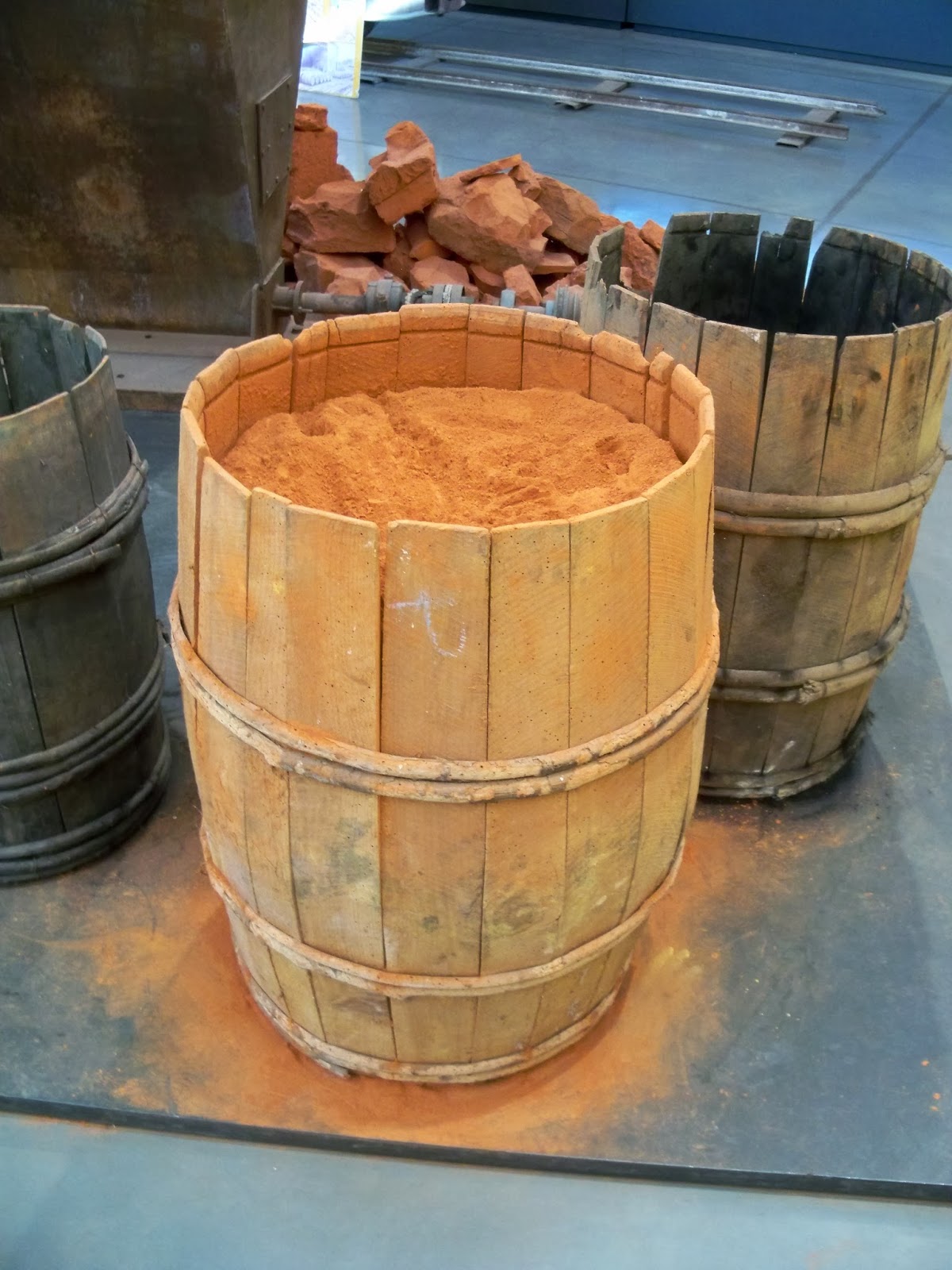
keg of red ochre
Tynnyrillinen punaokraa - A keg of red ochre

Okra on itse asisassa iso joukko värejä: keltaokra, kultaokra, punaokra... kemiallisesti jopa punaruskea sienna ja harmaanvihreä raaka umbra kuuluvat samaan, rautapitoisten savien väriperheeseen. Okra voi olla vaalean keltaista, vihertävää, oranssia tai jopa purppuraista. Olen leikitellyt ajatuksella kerätä "koko sarjan" ja käyttää niitä yhdessä työssä. Eri puolilta maailmaa löytyy eri värisiä okria, siksi joitakin okria kutsutaan löytöpaikan mukaan, kuten esimerkiksi ochre de Berri.

Okraa - tai mitä tahansa maapigmenttiä - voi valmistaa itse, jos löytää sopivan väristä maata. Suurimmat kivet poistetaan ja väri puhdistetaan liettämällä. Savimaa murskataan hienoksi, sekoitetaan runsaaseen vesimäärään ja kaadetaan astiasta toiseen, ja annetaan epäpuhtauksien laskeutua pohjalle. Kuumentamalla okraa voi varmistaa onko siinä orgaanisia aineita mukana: jos se muuttuu punertavaksi, se on puhdasta, jos taas mustaksi seassa on multaa tai kasvinjätteitä. Värinvalmistajana olen vielä täysin teoreetikko, viime keväänä löysin Porvoosta keltamultaa, siis jonkinlaista okraa, keskeltä polkua ja otin sitä desilitran mukaani. Lupaan raportoida tuloksista, kun ehdin käsitellä sen.

Vaikka ostaisi okransa kaupan hyllyltä, sitä täytyy yleensä hiertää veden kanssa. Värin hiertäminen saattaa joskus tuntua ärsyttävältä, mutta jos sitä ei tee, ikonin pintaan kerääntyy muruja, jotka puolestaan keräävät emulsiota, ja kasvavat vielä isommiksi. Okran on hyvä antaa ensin imeä vettä itseenä hetken, ennen hiertämisen aloittamista. Hiertämisessä on omat niksinsä, kun aikansa on hierrellyt, oppii paremmin hallitsemaan lasilevyllä vellovaa värimassaa, vuoroin kokoamaan ja levittämään sitä. Kuuntelemalla hiertimen ääntä tietää, milloin väri on valmis. Rahina muuttuu suhinaksi. Ei ihme, että keskiajan maalareiden oppipojat saivat aloittaa harjoittelunsa hiertämällä mestarille värejä, siinähän oppii kärsivällisyyttä. Maimerin keltaokra, ochre giallo, on niin hienoa, ettei sitä tarvitse erikseen hiertää.

Ikonimaalauksessa okraa tarvitaan heti työskentelyn alussa, sen jälkeen kun esipiirros on siirretty ja kiinnitetty laudalle. Pohjusteen kova valkoisuus rauhoitetaan sivelemällä ristiin rastiin, isolla siveltimella pari laihaa kerrosta "pohjaokraa". Seuraavaksi okraa saatetaan tarvita sankirin, ihon pohjaväriin, ja välilasuuriin ja toiseen vaalennosväriin, sitten kenties vaatteeseen tai kallioihin tai taustaan. Ei ikonia ilman okraa, väitän.

path of ochers, roussillon, france
 Le Sentier des ocres, (Okrien polku) Roussillon, Ranska
The path of Ochers, Roussillon, France

I am starting a series of posts about pigments. Most iconographers have an impressive collection of them: natural, syntethic, harmless, poisonous, indispensable and superfluos. You start with just a few jars - and you could get along just perfectly with them. Pliny the Elder claimed that the painters of ancient Greece only used withe, yellow, red, green and black. This assertion is partly based on a misunderstanding of terminology - the Romans used the same word for blue and green. Nevertheless, six of seven pigments, well chosen, could make an icon.

Just five pigments: withe, ocher, red, green and black. 
Romanescque wallpainting, Birnay, France


Vain viisi pigmenttiä: valkoinen, okra, maapunainen, vihreä ja musta.
Romaaninen seinämaalaus, Birnay, Ranska.
Of course, you will get curious when you see all the beautyfull colors the other painters have. Sometimes you make an impulse purchase, or change small amounts with your firends. Some colors you need for every icon, or in large amounts, some colors you need for one little detail. Once I bought a jar of Sennelier Veronese green for an icon.  It turned out to be a totally wrong kind of Veronese green, garish and bright, totally useless for the thing I intended it for. I feel vexed very time I see the jar in the back of the cupboard! Last summer someone gave me a small amount of cobalt violet, I have no idea what to use it for, but it looks nice. Nowadays I have two plastic candy boxes full of little jars with pigments -the jars are plastic containers for 35 mm film. In one of the boxes I have the colors I need all the time, the others I very well could do without. One thing is certain, the jars seem to multiply...

My first "pigment of the month" is ocher, the iconographers loyal friend and everyday companion. I don´t think there is a icon, wich is painted without ocher. Together with black and earth red, ocher is our oldest pigment, wich was in use already in paleolitic times for cave paintings and burial rituals.

Ocher is as a matter of fact a wide range of colors: yellow ocher, golden ocher, red ocher... chemically the brownish sienna and  greenish raw umber too belong to the same family of iron bearing clays. Ocher can be pale yellow, greenish or even purplish. I have been playing with the tought of "collecting them all" and using them all in one work. Clay from different parts of the world have different shades - hence ochers with a name of a place, ochre de Berri, for example.


You can make your own ocher - or any other natural earth pigment - if you find the right kind of earth. Remove the worst stones, crush the clay and add plenty of water. Keep pouring the water from one jar to another, all the impurities will sink to the bottom. You can also test the purity of ocher by heating it. If it turns red, it is pure, if it turns black, there is some organic matter left. When it comes to collecting my own pigments, I am a novice. Last spring I found yellow clay right in the middle of a path outside the Town of Porvoo. I took a little with me and promise to report when I find the time to refine it.

Even if you buy your ocher from your artist supply shop, you usually have to grind it. Grinding pigment can be tedious, but if you don´t do it, you will have little crumbs of clay all over your icon. All those crumbs will collect emulsion, and get bigger and bigger. It is good to let the ocher soak up some water for a while before grinding. When you have ground your pigments for a couple of icons, you will have found the right way to use the muller to collect the color and spread it out. By listening to the sound of the grinding, you learn when your color is ready, it´s when the rasping turns to swishing! No wonder the medieval masters made their apprentices grind the pigments - it does teach you patience. The yellow ocher of Maimeri is exceptionally fine, and does not require grinding.

The iconographer needs ocher right when the he starts painting, when the drawing is moved to the board. The first thing to do is tone down the glaring withe of the gesso with a little ocher, lots of water, a little emulsion and a big squirrel brush. Next he needs ocher for mixing the sankir, the ground color for skin tones. To achieve smooth changes from light to shade, one needs ocher glazes between the the layers of lighter colors. You might also need your ocher for clothes, or rocks or the background. No ocher, no icon, I would say!

torstai 2. tammikuuta 2014

Assist -kultaus - Working with assist gold

Hyvää uutta vuotta 2014! Happy new year 2014!

Tässä postauksessa kerron assistkultauksen työvaiheista. Mutta ensin käyn läpi ne yksitoista pientä korjausta, jotka mestari vaati tekemään "kotitehtä-ikoniin". Tässä "ennen ja jälkeen" kuvat korjauksista, harmillista että valo on niin erilainen. Pitäsi ehkä järjestää vakioitu kuvauspaikka.
  1. vasemman silmäpussin ja poskipään valo-alueet irti toisistaan
  2. ylähuuli leveämmäksi ja hieman hymyä lisää
  3. leveämpi nenä, tämä on liian naisellinen
  4. leuan valo ylös
  5. viikset lyhyemmiksi (suupieliin)
  6. partakarvoja parran yläreunaan
  7. himation (sin. vaate) varjo olkapäälle
  8. hoikenna kirjakäden peukaloa skalppelilla
  9. kirjan ja clavuksen väri tasaiseksi
  10. oikea kämmen, viiva pois ja etusormen alle varjoa
  11. samuta reunan punaista

    Before and after, eleven little things fixed

    The Pantokrator

    Ja sitten sitä luvattua kultausta! Assist-kulta eli sädekultaus tehdään kotikalja-uutteella. Laimenna uutetta lämpimällä vedellä 1:1 tai hieman vähemmän vettä kuin uutetta. Lopusta uutteesta voi tehdä kaljakakun. Levitä sormella kullattaville alueille liitujauhetta ja sipaise pörheällä orava-siveltimellä liiat liidut pois.


    Maalaa kaljauutteella kullattavat viivat. Sivellin saa olla niin kuiva kuin mahdollista, älä jätä lammikoita tai pisaroita. Muista, että kullattu viiva on aina leveämpi kuin kaljaviiva. Kuivata viivoja 1-2 h. Jos kuivatat liian vähän, viiva saattaa levitä, kun lasket kullan päälle. Jos kuivatat liikaa, kulta ei tartu.


    Ota siirtokultalehti kästeesi, hönkäise maltillisesti kaljaviivoja, ja laske kultalehti päälle. Paina sormesi kullan tukipaperin laidalle, jotta se pysyy paikallaan - se ei saa liikahtaa. Pyörittele toisella sormella hellästi paperin päältä, jotta kulta tarttuu kaljaviivoihin. Jos hönkäisee liikaa, viiva kostuu liikaa ja leviää.

    Kulta-arkkeja voi leikata sopivamman kokoisiksi. Anna kultauksen kuivua seuraavaan päivään. Lopuksi ota pörheä oravasivellin ja pyörittele irrallinen kulta pois. Suojaa kultaus sivelemällä viivat sellakalla.

    assist -gold drying

    Kultaus kuivumassa - Gold drying.


    In this post, I shall write about working with assist gold. But first I will list the eleven little fixes Antti asked me to do for my "homework icon". Here above you will find the "before and after" pics. Unfortunately the light is so different. I should really start using the same place and light for every picture.
    1. separate the lights of the eyelid and the cheek
    2. make the upper lip wider and add some smile
    3. wider nose, it is too feminine
    4. move the light of the chin up
    5. make the mustache shorter (to the corners of the mouth)
    6. add hairs to the upper edge of the beard
    7. make a deeper shadow on the shoulder, on the blue himation
    8. scratch the book holding thumb narrower with a scalpel
    9. paint the clavus and book cover even
    10. right hand palm, cover the line and add shadow under the fingers
    11. tune down the red on the "frame".
     beer drying for assist gold

    And then to the gilding! I do assist gold with a ready syrup for making home brewed beer or kvass. I dilute the mix with hot water 1:1 - or a little less water. Of the rest of the beer syrup you can make beer cake. If you can´t find the syrup in your local store, you have to gently boil ale until it is thick. Spread chalk with your fingertip on the areas to be gilded and brush of the exessive chalk with a squirrel brush.

    Paint the lines to be gilded with the beer mix. The brush should be as dry as possible, do´t leave puddles or drops on the lines. Remember the gilded line is always wider than the line you paint with beer. Let the lines dry for 1-2 hours. If you don´t let them dry enough, the beer will spread under the gold, and if you dry them too long, the gold will not stick.
    Take a leaf of transfer gold in your hand, breathe gently at the beer lines, and apply the gold leaf. Press your finger on the edge of the transfer paper, it must not move. Rub the transfer paper gently with your other hand, to make the gold stick to the lines. If you breathe too heavily on the beer lines, they will bee too damp and spread. You can cut the transfer gold leaves into smaller slices.

    Let the gilding dry over the night. Take a squirrel brush and roll it gently over the gilded area to remove the surplus gold. Protect the gilded lines with schellac using a narrow brush.


    torstai 5. joulukuuta 2013

    Pyhä Nikolaos - Saint Nicholas

    Pyhän Nikolaoksen ikoni on valmis, tämäpä kävi äkkiä! Aloitin heinäkuussa, työssä on ollut muutamia taukoja, mutta yhteenlaskettuja työtunteja ei ole kovin montaa. Toissa keskiviikkona laitoin sellakan assist-kullan päälle, maalasin helmet ja nyt ikoni saa odottaa olifointia. Assistin kanssa tuli varsinaista häslinkiä. Ensin viivat eivät meinanneet tarttua, ja kun tarttuivat, kultaa tarttui vääriinkin paikkoihin. Ilmeisesti pyhä Nikolaos oli sitä mieltä että kulta olisi pitänyt antaa köyhille!

    Tässä hieman käytettyjä värisekoituksia: Omofori eli piispan kaulavaate maalataan ensin valkoisen ja raa´an umbran sekoituksella, ja sitten valo-alueet puhaammalla valkoisella. Käytän nykyään aina "sekoitusvalkoista" jossa on puolet sinkkivalkoista ja puolet titaanivalkoista. Tämä siksi, että vaikka sinkkivalkoisella saa hienoja kuultoja, se ei ole kovin kestävää. Kun siihen lisätään titaanivalkoista, sen kesto paranee. Lyjyvalkoinen olisi kai paras valkoinen, mutta kukapa sellaista myrkkyä haluaa käsitellä? Omoforin ristit ja raidat on maalattu shungit -mustan ja ultramariin seoksella.

    Aluspukuun on vaalennokset maalattu seoksella jossa on ercolanoa, keltaokraa ja valkoista. Potamokset eli virrat, aluspuvun sivussa olevat "vauhtiraidat" maalasin uudella pigmentillä, cinnabar oscurolla. Värin nimi on italiaa ja tarkoittaa tummaa sinoperia. Se on näppärästi kylmän sävyinen. Vaikka tähän mennessä en tosin ole tarvinnut kylmää punaista kovin usein, se on hyvä olla olemassa. Ikonimaalarilla ei voi olla liikaa pigmenttejä, vai voiko? Arkkienkeleiden vaatteita maalattaessa se olisi saattanut olla ihan paikallaan... Värin ostin Arabeskistä, joka tuo maahan ikonimaalaustarvikkeita Venäjältä, vaikka niitä ei heidän nettisivuilaan mainostetakaan.

    earth water icon

    Aallokko on ensin pohjustettu sankirilla ja rajattu shungit-mustalla. Sitten toimitaan hieman samaan tapaan kuin hiuksia tai partaa maalattaessa: Ensin maalataan leveä keskiharmaa raita reftillä eli mustan ja valkoisen sekoituksella. Seuraavaksi lisätään valkoiset kapeat raidat molemmin puolin. Viimeisenä tässä on lasuuri, jossa on ultramariinia, kromidioksiidi-vihreää, raakaa umbraa ja tippa mustaa. Vuorissa varjot on tehty laihalla hercolanolla ja valo okralla ja valkoisella. Itse asiassa, tällainen sommitelma, joka näyttää niemenkärjeltä, tarkoittaa ikonitaiteessa että henkilö on saarella, kuten erimerkiksi Herman Alaskalainen.

    Oli todella mukavaa maalata pyhä Nikolaosta. Työstä sain mukavasti hieman lisää itseluottamusta pienten asioiden maalaamiseen. Seuraavana valmistunee pyhittäjä Antonios Suuri, ja palkattaparantaja Trifon Lampsakoslainen pääsee työn alle.

    St Nicholas

    Omofori, pohjaväri - Omoforion first color.

    St Nicholas


    Omoforiin on lisätty valoa ja varjoa , aluspukuun "addidas" -viivat eli potamokset.
    Lights and shades added to the omoforion, the potamos, and the "addidas"-lines on the stikarion.

    lettering for icon

    Tilaaja halusi tekstit ruotsiksi - This ikon will have text in swedish.


    lettering for icon, mess

    Suttuista puuhaa, tämä tekstaus, pigmentti on falunin punainen.
    Smudgy business, this lettering, the pigment is called falun red.

    The icon of Saint Nicholas is ready, this went fast! I started in July, there has been a few brakes in the work, but the actual hours I spent on this one are not many. Last wednesday I applied shellac on the assisist gold, now the tempera has to dry before the olifa. Working with the assist was quite a mess.  First the gold did not want to stick to the icon, and when it did, there was gold stuck all over the place. I guess saint Nicholas thought the gold should have been given to the poor!

    Here comes a few notes on the colours I used. For the omofor I used raw umber and withe. For lighter areas I added more withe. I use a 50/50 mix of zinc white and titanium white, because the zink gives nice glazes, but does not last alone. Lead white would be ideal, but who wants to handle such poisonous stuff? The crosses and lines on the omophor are painted with a mix of shungite black and ultramarine.

    The potamos - the rivers, are stripes on both sides of the cassock. I painted them with a new pigment, cinnabar oscuro - dark cinnabar. It is nice to have a strong cold red, even though I so far have rarely needed it in my icons. If you´re an iconographer, you can´t have too many pigments, can you? It could have been useful when I did the Archangels vestments...  The pigment is from a webshop Arabeski, they import materials for iconography from Russia.

    The wawes have first a ground of sankir, and are drawn with shungite black. Then the procedure is the same as when you work on hair or beard: first a wide line in reft gray, and then two narrower lines on both sides with white. For the sea you need to end with a glaze of ultramarine, viridian green, raw umber and a little black. On the mountains the shadows are made withe ercolano red and the light with white and yellow ochre. As a matter of fact, this composition I used, with the person standing on a peninsula, is in iconography used to show a person who is on an island. Take saint Herman of Alaskala, for example.

    I really liked painting this icon, it made me much more confident about painting small things. The next to be completed is st. Anthony the Great, then I will start working on the holy unmercenary Tryphon of Campsada.


    St Nicholas

    Pyhä Nikolaos ihmeidentekijä, rukoile meidän puolsetamme!
    Saint Nicholas, pray for us!

    torstai 28. marraskuuta 2013

    Lukijapostia - Mail from a reader

    St Nicholas, 18. century


    Koso-täti lähetti minulle kuvan Kotkan kirkon pyhän Nikolaoksen ikonista. Akateemiseen tyyliin maalatun pyhän taustalla riehuu meritaistelu. Kyseessä on varmaankin Ruotsinsalmen ensimmäinen meritaistelu, joka käytiin elokuussa 1789, ja jonka Venäjä voitti. Heinäkuussa 1790 käytiin toinen taistelu, jonka voitti Ruotsi. Wikipedia kertoo, että sen jälkeen Venäjä aloitti alueella linnoitustyöt, jotka johtivat pikku hiljaa Kotkan kaupungin syntyyn. 

    Yksi vuoden 1790 taisteluissa uponneista laivoista oli venäläinen fregatti St Nikolai. Ikoni saattaa myös olla maalattu laivan mukana hukkuneiden sotilaiden muistolle. Vuonna 1948 St Nikolain hylky löydettiin vahingoittumattomana. Politiikka ikonitaiteessa on aiheena vähintään väitöskirjan mittainen - ja erittäin sekava - tarina, jota en ryhdy tässä kertomaan.


    One of my readers, auntie-Koso, sent me a picture of the icon of St Nicholas from the church in Kotka, South East Finland. In the icon there is a naval battle going on behind the saint. More than likely it is the first battle of Svensksund, in which Russia defeated Sweden 1789. In 1790 there was another battle, which Sweden won. Wikipedia tells us that after this Russia started to build fortifications in the area, which later led to the founding of the city of Kotka.

    In the battle of 1790 one of the ships that sunk was a Russian frigate called St Nicholas. The icon might also be painted to the memory of the soldiers who lost their lives. In 1948 the hull of St Nicholas was found intact. Politics in iconography is a long - and probably most disorderly - story, at least the length of a doctoral thesis, I will not go deeper in to this subject now.